

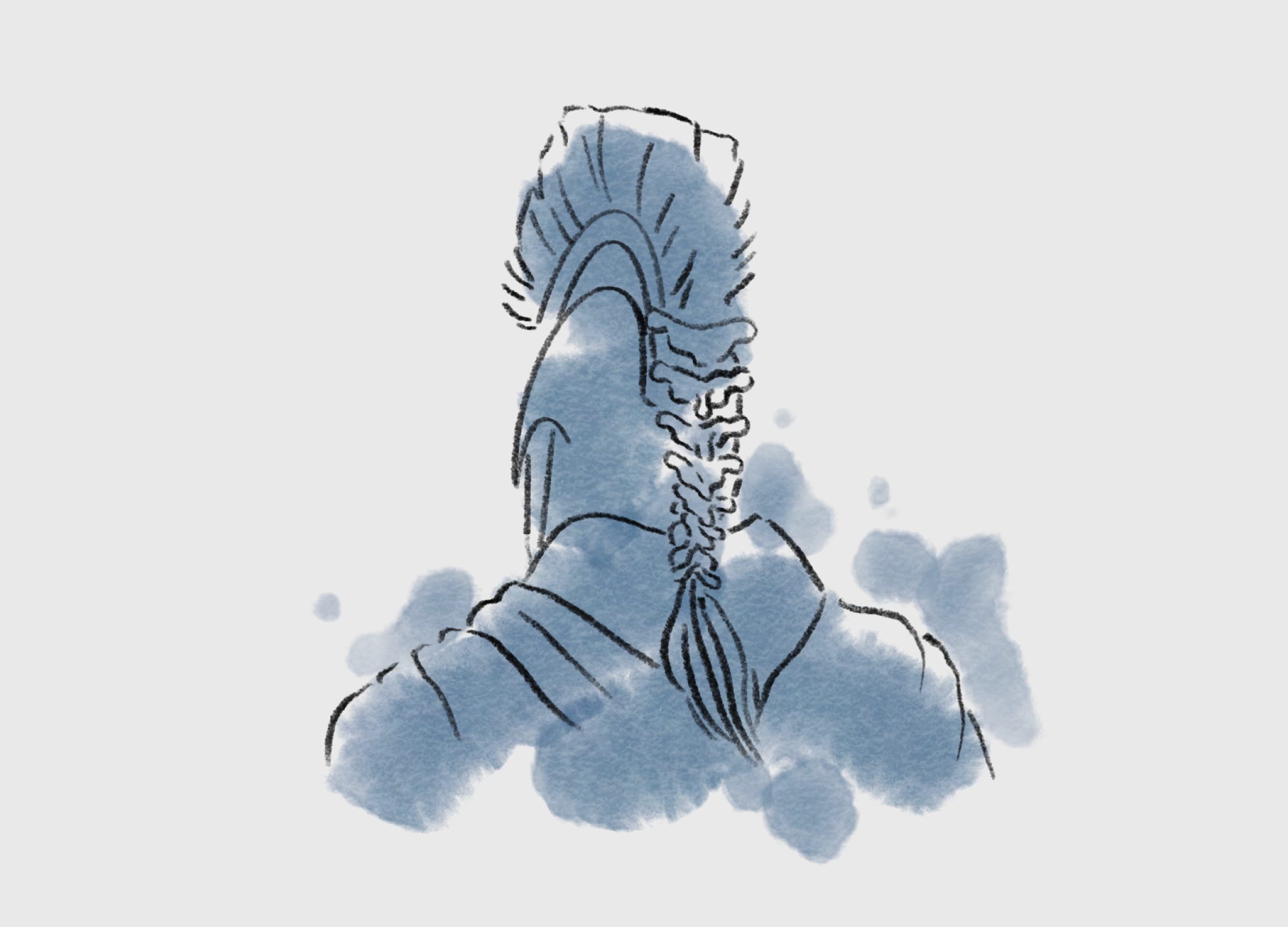
Christopher Nolan’s adaptation of The Odyssey is melancholic and brutal. It leans into the darker aspects of Homer’s epic and its characters. The destruction of Troy and the suitors’ abuse of Odysseus’ family hang over the film like an ominous cloud. The mischievous warrior-trickster Odysseus is all but absent. In his place is a disillusioned veteran with PTSD who just wants to get himself and his men home.
Time Slicing
The slicing, dicing, and rearranging of time that has become a hallmark of Nolan’s films is back and done with great impact, especially when it comes to the destruction of Troy. The movie’s pacing feels rushed and includes as much as possible with some creative combinations of events from the book. Regrettably, the film rarely lingers or lets you soak in any one environment or scene. It relentlessly marches forward to the climax.
Breaking Zeus’ law
At its heart, this movie is about what we owe to each other—even our enemies. The Trojan horse becomes the quintessential symbol of breaking that sacred obligation—Zeus’ law, the golden rule, whatever you want to call it. This travesty enables Odysseus and his men to enter Troy disguised as a gift of peace. They then kill the guards and open the gates to Darth Agamemnon and his army who enter and let loose 10 years of pent-up rage on the unsuspecting Trojans. Nolan’s Odysseus is haunted by the destruction and war crimes his scheme makes possible. It is after these events that Odysseus’ men are marked for death by the gods.
Defying the gods
Odysseus delays, bargains, and tries in vain to defy the gods’ retribution by attempting to save his men and return them home. Surprise, he only delays the inevitable and all of his men end up dead. Odysseus is shipwrecked and spends 7 years with Calypso until she realizes he’ll never love her as much as Penelope and decides to help him recover his mind and return to Ithaca.
Aiding the gods
Odysseus returns home in disguise to check things out before revealing himself. This part of the film moves quickly in wrapping up loose ends and showing the viewer that Odysseus has learned the lesson Athena was trying to deliver to him throughout the story. The bill finally comes due. Odysseus becomes the gods’ instrument in delivering justice and death to the suitors who have desecrated his home (not unlike the Greeks’ destruction of Troy) and disrespected his family. Scales balanced, Odysseus sails off into the sunset with Penelope leaving Telemachus to lead civilization out of the bronze age and into a better dawn.
Conclusion
The surface, feel, sound and visuals are stunning. The practical effects and use of analog film make it feel more real and visceral than any movie I’ve seen in a while. It’s quite easy to suspend your disbelief for the 3-hour run time and immerse yourself in the world all these combined elements create. The themes explored are compelling and many of Nolan’s adjustments made the story more cohesive as a whole.
That said, I don’t think it’s a world I’ll revisit often. The genre mixing of action, horror, and drama never quite gelled for me. While it ends on a hopeful note—the feelings that pervade this adaptation are heavy and foreboding. The overall effect is an epic that doesn’t feel sweeping and expansive, but walled in and smothering.