
Film Review: Backrooms (2026)
This film is crystal clear as to the cost of not escaping old habit loops that no longer serve you—eventually they’ll come back to bite you.

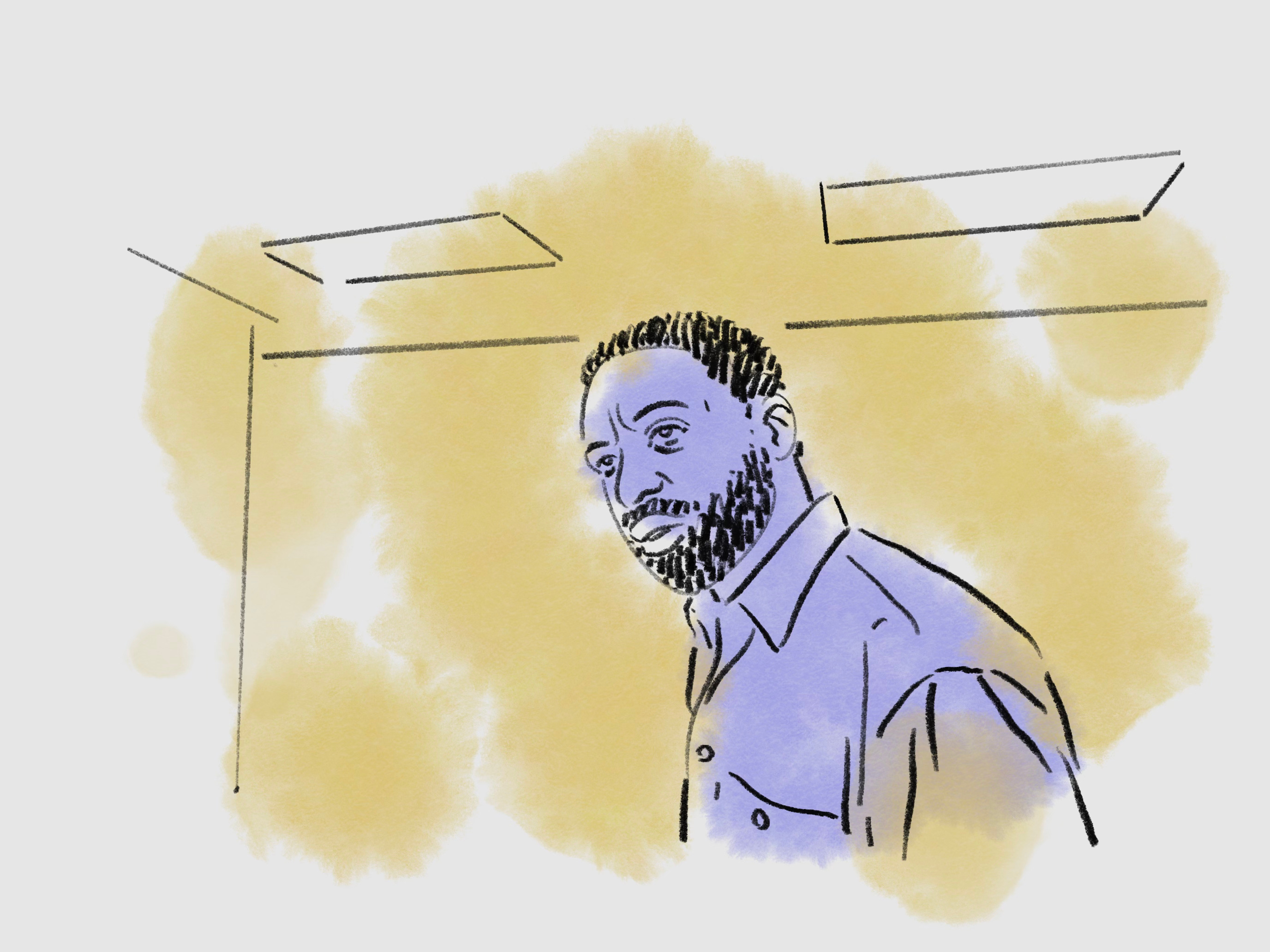
If Backrooms asks a deeper question of the audience, it is this: do people ever really change or are they stuck with the neural pathways set down in childhood?
Set in 1990, the movie is about two people: Mary, a therapist (Renate Reinsve) and her patient, Clark (Chiwetel Ejiofor). Both are stuck in their own ways. Clark dreams of being an architect, but runs a failing furniture store. Mary is shown to be unfulfilled by her work as a therapist.
In a particularly awkward session Mary tells Clark he’s stuck—acting out behaviors he learned as a child to cope and it’s left him back where he started—alone. She encourages him to try and take a new path and see where it leads. They then roleplay the night his ex-wife left him and it ends with Clark losing his temper and blaming all of the problems in his marriage and life on his ex. Mary is visibly shaken by the session and it ends somewhat unresolved.
Flashbacks throughout the film reveal Mary’s mother to have been mentally ill. In one, young Mary walks toward windows that have been covered with newspaper clippings and cardboard. She starts to peel one back when her mother sternly reminds her to never open the window because “they” are everywhere. In another, young Mary visits her mother in some kind of mental asylum. Perhaps Mary is stuck in a loop trying to help people that can’t be helped—or at least, not by her.
One night, while sleeping in the showroom of the furniture store he runs, Clark discovers something in the basement of the store—a thin line of light on the wall. When he attempts to push against the wall, he simply falls through it and enters the backrooms.
The backrooms are a series of rooms that seem to go on forever. They are full of inexplicable objects—not unlike many contemporary art exhibits—that leave those exploring the backrooms dazed and confused. The first room Clark enters has a massive pile of furniture in the center of the room. Armchairs, lamps, filing cabinets, dressers, bookcases, and stools stacked and piled haphazardly in a mound. These furniture piles in different rooms look like ugly versions of the stunning furniture art installations by Ai Weiwei.
In their next session, Clark tells Mary about the backrooms and it is clear she thinks he is losing his grip on reality. He storms out, but not before vowing to bring evidence back to his next session.
He enlists two college kids with a camera to help him document the backrooms.
Then things go off the rails.
We see that these rooms are populated by the memories of the people exploring them. Or rather, distortions of memories—twisted and contorted by time and distance from the real article. The most dangerous of which are the ones that Clark’s mind brings with him.
Clark leaves a message on Mary’s answering machine that simply says, “I opened the window, I’m not coming back.” Still wanting to help Clark, Mary goes to the furniture store looking for him and finds her way into the backrooms.
She eventually finds her way to a room with a very disturbing and Basquiat-looking mural on one wall. And then she finds Clark, or he finds her and she is choked until she loses consciousness.
The camera cuts to the room Mary was in as a child and then descends through many floors until we reach a room that looks like a kitchen. Did Mary and her mother escape the backrooms when she was a child? Mary is now tied to a chair. What follows is an inverted version of the therapy session from the start of the film, but this time both Mary and Clark are honest with each other. Mary confesses that she can’t help him and tells him—quite bluntly—that his problems are his own fault and he’s the only one who can do anything about it. Clark admits he doesn’t want to change or leave the backrooms. He explains why he is content to stay there with the grotesque inhabitants the rooms have fashioned from his distorted memories:
“In some ways, they’re an improvement on the real thing. For starters, they can’t feel anything. Can you imagine how good that must feel? I mean… there’s no thoughts, no pain, no ego, no fear. They simply exist. Like, like furniture.”
In this distorted world, of which his mind is at least a collaborating architect, there is no longer any pressure to accommodate others or worry about their internal worlds.
This is Clark’s point of no return.
In taking the path of least resistance, he seals his fate. After untying Mary so she can leave, a monstrous version of himself arrives. It kills Clark and then stalks Mary as she runs from room to room looking for a way out.
The ending is ambiguous as to whether Mary ever physically escapes the backrooms, but she seems to have broken her own loop by admitting to herself that she couldn’t help Clark. In any case, this film is crystal clear as to the cost of not escaping old habit loops that no longer serve you—eventually they’ll come back to bite you.